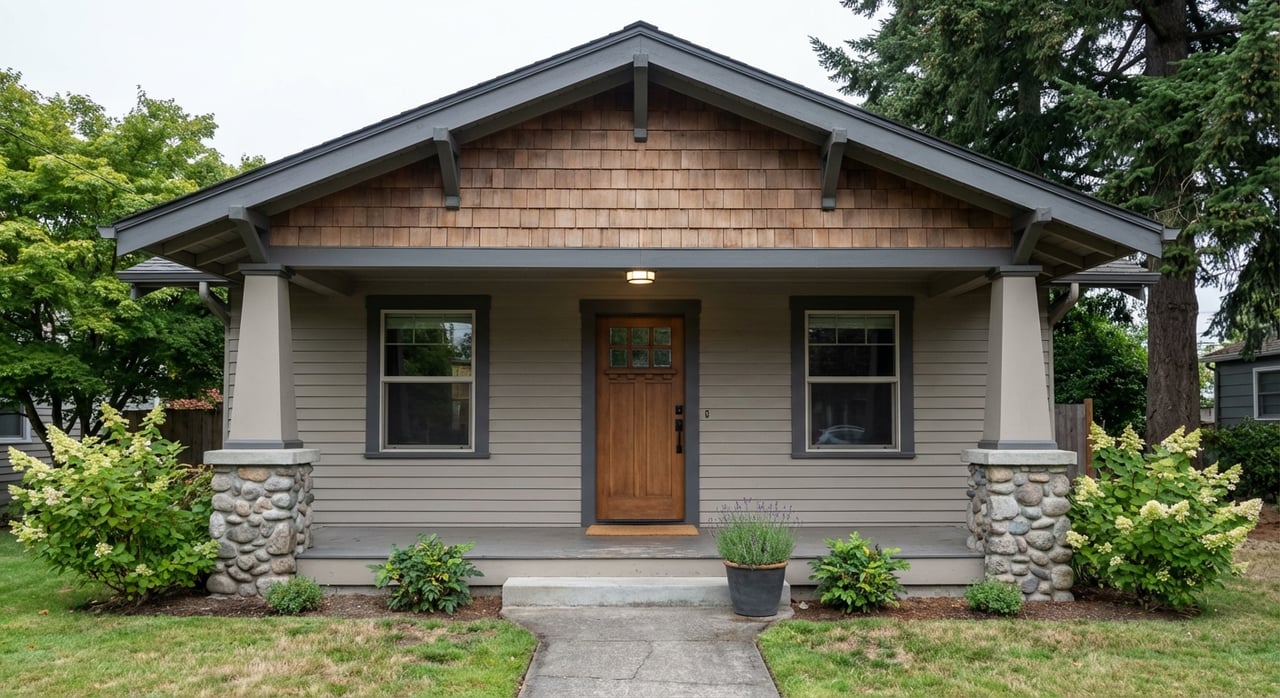
If you’ve ever fallen for a wide front porch, chunky columns, and warm wood built-ins, you already understand the pull of a classic Craftsman. In Spokane, these homes are everywhere, and for good reason. They offer character, comfort, and walkable neighborhood settings that feel timeless. In this guide, you’ll learn what defines a Craftsman, where to find them in Spokane, and how to buy and update one with confidence. Let’s dive in.
What makes a Spokane Craftsman
Craftsman and bungalow homes prize natural materials, hand-worked details, and practical floorplans. They were designed for everyday living, not show. That is a big part of their lasting appeal. If you know the hallmarks, you can spot them from the street and recognize their best interior features.
Exterior details to spot
- Low-pitched gabled or hipped roofs with wide eaves and exposed rafter tails or knee braces. These rooflines create the familiar, sheltering profile. Architectural Digest’s overview of bungalows walks through these signatures.
- Deep, covered front porches with substantial, often tapered square columns set on brick or stone piers. Porches are a defining social space.
- Natural materials and texture. You’ll see wood clapboard or shingles, clinker or rough stone chimneys and foundations, and grouped windows with multi-pane upper sashes.
Interiors built for everyday life
- Original built-ins are a big value-add: bookcases flanking a fireplace, dining room buffets, window seats, and boxed benches. Architectural Digest notes these features as core to the style.
- Floorplans are usually one to one-and-a-half stories for bungalows, with easy flow between living and dining instead of long hallways. Larger high-style Arts & Crafts or two-story Craftsman homes also exist.
- Expect substantial wood trim, wide casings, and a central fireplace often finished in tile or stone.
Why Spokane has so many
Spokane grew quickly in the early 1900s during the streetcar era, exactly when Craftsman and Arts & Crafts designs were most popular nationwide. That timing left a large, visible stock of these homes throughout the city. Architectural Digest’s history of bungalows places this boom in a national context.
Curving boulevards and park planning on the South Hill, plus the influence of prominent local architects, shaped entire neighborhoods of Craftsman homes. Streets like 29th Avenue helped anchor districts where high-style houses stand beside modest bungalows, creating blocks full of character. You can read more about this planning legacy in the Spokesman-Review’s neighborhood history feature.
Where to find them in Spokane
You’ll see Craftsman and bungalow homes across the city, especially in older streetcar-era neighborhoods and historic districts. Here are a few places to start your search:
Browne’s Addition (near downtown)
This local historic district blends high-style Arts & Crafts houses with smaller Craftsman bungalows on tree-lined streets, all within minutes of downtown and the Northwest Museum of Arts and Culture. The Browne’s Addition historic district page explains the district’s character and how preservation standards work.
West Central and Nettleton’s Addition
A classic streetcar suburb west of downtown, Nettleton’s Addition is known for an exceptionally intact collection of early 20th-century homes, many of them bungalows. The Nettleton’s Addition Historic District summary provides a helpful overview.
Rockwood and Manito on the South Hill
Curving, Olmsted-influenced boulevards and parks set a beautiful backdrop for a range of Craftsman bungalows and larger Arts & Crafts houses. It’s one reason Rockwood often shows up in local architecture stories. Get neighborhood context in this Spokesman-Review piece on South Hill history.
Perry District
South Perry offers a compact, walkable commercial corridor surrounded by many intact Craftsman and bungalow homes. Explore the neighborhood vibe in this Here Spokane community spotlight.
Other areas with early 20th-century homes include Audubon/Downriver, Emerson-Garfield around Corbin Park, Cliff/Cannon, and parts of Hillyard. You’ll find Craftsman elements sprinkled across these neighborhoods in varying sizes and styles.
Typical sizes and layouts
In Spokane, smaller bungalows often run about 800 to 1,500 square feet, usually one to one-and-a-half stories. Larger Craftsman and high-style Arts & Crafts homes can stretch from roughly 1,500 to 3,000 square feet or more depending on the neighborhood and lot. Floorplans tend to prioritize an open path between living and dining, with bedrooms grouped for efficient use of space.
Touring checklist for buyers
A thoughtful walkthrough helps you understand condition, character, and potential costs. Bring a notepad and take your time with the details.
Structure and exterior
- Roof, flashing, and eaves. Older valleys and wide overhangs need careful attention for past leaks or rot.
- Porch framing, columns, and slabs. These are common repair items on Craftsman homes. Preserve proportions if you plan updates so the porch still “reads” correctly. Guidance on porch details appears in Architectural Digest’s bungalow overview.
- Foundation and drainage. Look for signs of settling or water intrusion, especially in basements typical of Spokane’s housing stock.
Systems to evaluate
- Electrical. Ask about any remaining knob-and-tube wiring, undersized service panels, or older fuse boxes.
- Plumbing. Galvanized or lead piping may be present in pre-1950 homes and can limit pressure or quality.
- Heating and cooling. Older oil or gas furnaces, or boiler systems, may be due for upgrades. The Historic New England homeowner primer outlines common issues in older homes and is a helpful planning resource.
Historic features to keep
- Intact wood trim, hardwood floors, built-ins, and original window sashes with multi-pane uppers are character-defining and hold value. See core style elements in Architectural Digest’s guide.
Common updates and what they mean
Thoughtful updates can make a Craftsman more efficient and functional without losing charm. Here’s what you’ll often see.
Kitchens and baths
Many owners modernize appliances, counters, and lighting while keeping adjacent woodwork and built-ins. Look for updates that feel sympathetic to the home’s scale and materials.
Mechanical and efficiency
Heat pumps are increasingly common in Spokane because they can improve year-round comfort and energy performance. Local HVAC pros share considerations for our climate in this overview on heat pumps for Spokane homes. In many cases, utility rebates and federal programs can help offset costs. Use this Avista rebates summary as a starting point and confirm current eligibility before budgeting.
Porches and foundations
Porch posts, railings, and slabs are frequent repair needs. When replacing or repairing, match original dimensions and spacing so the home’s proportions remain balanced. Details on porch character appear in Architectural Digest’s bungalow overview.
Preservation, design review, and incentives in Spokane
Spokane supports sensitive rehabilitation through local historic districts and owner incentives. Understanding the basics helps you plan projects and estimate true costs.
- Special Valuation. If your property is listed on the Spokane Register (or contributes to a local historic district), you may qualify for a 10-year property tax relief program tied to eligible rehabilitation spending. The city’s incentives page explains criteria, timelines, and application steps.
- Façade Improvement Grant. This matching grant offers up to $5,000 for eligible exterior work on qualified historic properties. See program details and standards on the Spokane Historic Preservation Office incentives page.
- Design review basics. In local historic overlay districts like Browne’s Addition, exterior changes visible from the street typically require review. Interior work is usually not restricted, and interior spending can count toward Special Valuation thresholds. Following the Secretary of the Interior’s Standards helps projects pass review and stay on timeline.
Quick buyer tips for a smooth purchase
- Budget smart. Plan for mechanical updates and targeted restoration of woodwork or porches. Durable original materials can last, but older systems may need attention.
- Keep what matters. Prioritize preserving built-ins, wood trim, original fireplaces, and porch details. These are the character anchors buyers value most.
- Phase upgrades. Improve comfort with attic insulation and air sealing, then address HVAC. Ask about utility and federal incentives to stack savings where possible.
- Verify district status. If a home is in a local historic district, review exterior rules early so your design and budget align with standards.
Why locals love these homes
Craftsman and bungalow homes feel grounded and human-scaled. They welcome you with a deep porch, surround you with warm woodwork, and flow easily for daily life. In Spokane, they also connect you to neighborhoods shaped by parks, boulevards, and a century of local history. When you balance style with practical updates, you get a home that lives beautifully today and holds value for tomorrow.
Ready to find your own Craftsman in Spokane? Reach out to BranDen Tipton for a curated search, on-the-ground touring guidance, and negotiation-focused representation from a local husband-and-wife team.
FAQs
What defines a Craftsman home in Spokane?
- Look for low-pitched roofs with wide eaves, exposed rafters, substantial porches with tapered columns, and interiors with built-ins and a central fireplace. See the style hallmarks in Architectural Digest’s guide.
Where are Spokane’s Craftsman homes most concentrated?
- You’ll find many in older streetcar-era neighborhoods and historic districts such as Browne’s Addition and Nettleton’s Addition in West Central, plus Rockwood/Manito and the Perry District.
Do historic districts restrict updates on Craftsman homes?
- Local overlays typically review exterior changes visible from public streets. Interior updates are not usually restricted, and qualifying projects may unlock incentives. See how review works in Browne’s Addition.
Are there tax or grant incentives for rehabilitating a Spokane Craftsman?
- Yes. Eligible historic properties may qualify for Special Valuation property tax relief and a Façade Improvement Grant. Review requirements on the city’s historic incentives page.
What should I check before buying an older Craftsman?
- Evaluate roof and porch condition, foundation and drainage, electrical and plumbing systems, and the integrity of original woodwork and windows. The Historic New England primer is a helpful checklist for older-home systems.
